Which Great Wall Section to Visit: Scenery, Seasons and Stamina
Compare Mutianyu, Badaling, lakeside Huanghuacheng, underwater remains and coastal or western forts by season, travel time and family needs.
- Quick answer: choose the landscape, then the journey
- Find your place on the map
- Mountain wall: begin with one section
- Lakeside, underwater and seafront: three different experiences
- Match the day to your group
- Best season depends on what you want to see
- Turn the choice into a workable day
- Booking and access: five things to settle
- Sources and review date
Quick answer: choose the landscape, then the journey
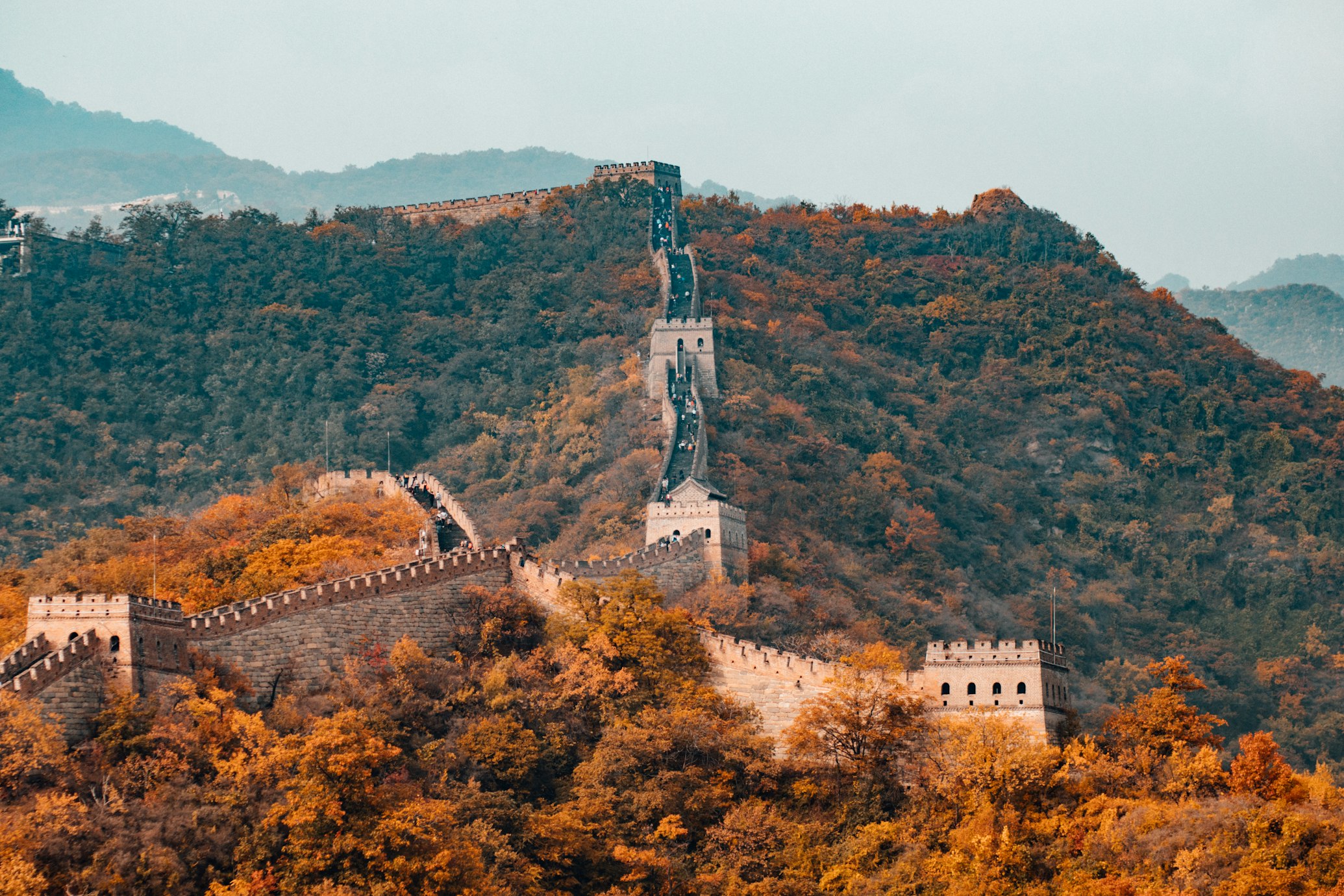
For a first visit from Beijing, compare Mutianyu for a mountain-wall day with a deliberately short walking route and Badaling when its rail connection suits your hotel and return plan. Choose Huanghuacheng for water beside the wall. For a wall meeting the sea, look at Laolongtou in Qinhuangdao; for a monumental western pass, consider Jiayuguan as part of a Gansu trip.
The best section is the one whose approach, steps and return journey fit your group. A view across a lake, a long ridge walk and a visit to a fortified gateway create very different days. This is an editorial selection guide, reviewed 2026-11-02, with official references below. It covers landscape and planning choices; today’s route, lift operation and ticket availability require a separate check.
Find your place on the map
These landscape groups are our editorial shorthand. A section can belong to several groups; they are not an official classification.
| Place to search in English and Chinese | Region and landscape | Choose it when… | Main trade-off |
|---|---|---|---|
| Mutianyu / 慕田峪长城 | Huairou, Beijing; wooded mountain ridges | You want the mountain-wall view and can tailor a short walk | Confirm the uphill and downhill equipment separately; steps remain. |
| Badaling / 八达岭长城 | Yanqing, Beijing; mountain wall and gateway | Rail fits your starting point and you value a clear return plan | Include city-to-station travel, station exit and the climb, not just train time. |
| Jinshanling / 金山岭长城 | Luanping, Chengde, Hebei; ridges and watchtowers | Walking and photography justify a separate outing | Verify the exact open route and transport; adjacent sections have separate management. |
| Simatai / 司马台长城 | Miyun, Beijing; ridge above Gubei Water Town | You also want time in the water town | Confirm wall access separately from the town; check any evening product for your date. |
| Huanghuacheng Lakeside Great Wall / 黄花城水长城 | Jiuduhe, Huairou, Beijing; lake and wall | Water in the composition matters more than a long ridge hike | Check the chosen lakeside or wall route; a boat or boardwalk is a separate operating question. |
| Xifengkou / Panjiakou / 喜峰口、潘家口 | Hebei reservoir landscape; submerged heritage | You want to understand the underwater-wall story | Public access and visibility remain unverified here; no visitor route is recommended. |
| Shanhaiguan / Laolongtou / 山海关、老龙头 | Qinhuangdao, Hebei; fortified pass and seafront | A coastal stay is already part of your journey | The pass and seafront are separate stops; plan local transfers and sea wind. |
| Jiayuguan / 嘉峪关关城 | Jiayuguan, Gansu; fortified gateway | You are already exploring the Hexi Corridor | It adds a different region to the trip; the nearby Overhanging Great Wall is another stop. |
Mountain wall: begin with one section
The pleasure of a ridge view is watching towers recede over successive folds of hillside. You can enjoy that composition without reaching the highest tower. At Mutianyu, pick a short out-and-back with a turnaround point agreed before the climb. At Badaling, choose the side and return arrangement after checking actual facilities that day. Neither name guarantees fewer visitors.
Jinshanling merits a closer look if walking or photographing architecture is a main interest. Its location across the Beijing–Hebei boundary matters when arranging a pickup. Do not turn geographical proximity to Simatai into an assumed through-hike: ask about the permitted route and the exit you will actually use.
Lakeside, underwater and seafront: three different experiences
Huanghuacheng offers the wall-and-water landscape in Beijing. Xifengkou and Panjiakou refer to submerged remains associated with a reservoir in Hebei. We have not verified public access or a bookable route to those remains. Water levels influence what can be seen, so there is no defensible fixed “best month” for underwater ruins in this guide.
Laolongtou adds the sea to the picture. It belongs with Shanhaiguan and a Qinhuangdao stay, giving you a coastal alternative to Beijing’s mountain outing. Heritage descriptions and conservation reports establish what these places are; a reporter’s boat trip or patrol route provides no visitor permission.
Match the day to your group
| Your conditions | Our starting recommendation | Limit and fallback |
|---|---|---|
| First Beijing trip, one free day, comfortable on steps | Compare Mutianyu and Badaling from your actual hotel | Choose one, keep the evening light and confirm the return before setting off. |
| Baby or toddler, stroller and bags | A short daytime visit with a simple round trip | Confirm the full approach and equipment rules; a stroller-friendly visitor area does not establish a step-free wall route. |
| School-age child who enjoys climbing | One section, a modest tower goal and regular pauses | These are pacing suggestions, not ticket-age rules; check the operator’s child policy. |
| Older companion who prefers limited stairs | Prioritize the approach, queues and descent over the number of towers | Age alone says little about stamina; if the route cannot be confirmed, choose a city day. |
| Wheelchair or a strict step-free requirement | Seek confirmation for every segment before buying | Ask about gradients, lifts, toilets and assistance; the presence of a cable car is insufficient evidence. |
| Photography with flexible dates | Compare ridge sections and Huanghuacheng’s water views | Match opening hours to the light you want; sunrise, cloud seas and empty walls are not guaranteed. |
| Only an airport layover | Start with airport return and sleep requirements | Keep one realistic objective; avoid combining a long wall transfer with a timed palace visit. |
Best season depends on what you want to see
For comfortable walking around Beijing, spring and autumn are our starting choices. For flowers, Beijing’s March 2026 guidance described late March–April displays. For autumn color, the city’s October 2025 report is a historical reference, not a forecast for your year. Check current foliage reports before booking around a particular color; November can already mean bare trees and shorter visiting days.
Summer requires a heat and rain plan. In winter, let daylight, ice and wind determine how ambitious to be; snow is a possibility, never an entitlement. A clear-looking photograph cannot tell you whether the steps or lifts are operating safely that day. Use the holiday calendar alongside the weather forecast; an attractive season can overlap a busy holiday.
For Laolongtou, choose the date around your coastal stay and wind forecast. For Jiayuguan, choose around the wider Gansu itinerary, temperature and wind. Our preference for a comfortable walking day is editorial advice; we have no measured, universal best-viewing window for these sites or the reservoir remains.
Turn the choice into a workable day
One day from central Beijing: reserve the day for one wall section. Work backward from closing, the last usable descent and the confirmed return transport. Then add hotel-to-pickup travel, queues, food and walking pauses. This is a whole-day planning allowance, not a claim that every visit requires the same number of hours. Read our Beijing 3–4 day itinerary for a shorter and a more active wall day.
One night near a section: consider this when the surrounding area itself interests you, such as time in Gubei Water Town, or when a long transfer would crowd out your visit. Confirm your accommodation’s precise location and transport. An overnight stay grants no after-hours wall access, and an advertised night visit needs its own current ticket and operating check.
A wider China trip: place Shanhaiguan/Laolongtou with Qinhuangdao and Jiayuguan with Gansu. Adding a distant region just to collect another wall view can consume a travel day. Compare the complete journey using the high-speed rail guide and, for family transfers, our rail guide for children and older travelers.
Booking and access: five things to settle
- Use the precise destination and entrance. Save the Chinese name, pickup point, booked route and return meeting point. A broad “Great Wall tour” label hides important differences.
- Match the booking to each passport. Mutianyu’s published visitor notice covers passport bookings and original-document checks. Badaling’s government service report from 2024 describes passport support. We have not completed a 2026 purchase with an overseas phone and card; confirm your chosen channel’s current requirements before paying.
- Check what each ticket includes. Wall entry, a shuttle and uphill/downhill rides can be separate. At Mutianyu, verify the operator and return point before combining a cable car, chairlift or slide. Buy only an arrangement everyone can use.
- Ask about today’s exact route and equipment. Weather and maintenance can change the plan. For Badaling, obtain confirmation of the specific north or south equipment you need; do not use a generic cable-car photograph as evidence of operation.
- Decide the fallback before leaving. If conditions prevent a suitable visit, swap days or choose a city activity from the Beijing destination guide. Restrict walking to the designated open route.
Sources and review date
Reviewed 2026-11-02. Official material supports the site identities and selected visitor facts; the comparison, pacing and suggested group matches are editorial judgments. Historical publications are dated below and do not certify today’s complete operations.
- Mutianyu visitor notice and Beijing’s Mutianyu introduction: documents and facilities; confirm current route limits.
- Beijing’s Badaling introduction, March 2026 and foreign-visitor services, May 2024: site and historical passport-channel information.
- Beijing’s Huanghuacheng introduction and Beijing ticketing directory: landscape and the Simatai–water-town setting; specific products require confirmation.
- Hebei tourism department on Jinshanling, May 2026 and separate Jinshanling/Simatai management, April 2024: location and heritage context, not a through-walk permit.
- Hebei heritage authority on submerged remains, May 2026 and Laolongtou, July 2026: heritage context; reservoir visitor access unverified.
- Jiayuguan tourism guide, April 2026: regional trip context; current ticket and route details require operator confirmation.
- Beijing spring flowers, March 2026 and Yanqing autumn color, October 2025: seasonal observations, with weather and year-to-year uncertainty.